Turquoise Flower Digital Paper Patterns: Elevating Creative Workflows with Purposeful Design
In today’s fast-paced creative economy, professionals—from freelance designers and small-business owners to marketing teams and craft entrepreneurs—are redefining efficiency without sacrificing aesthetic integrity. At the intersection of intentionality, scalability, and visual cohesion lies a quietly transformative resource: Turquoise Flower Digital Paper Patterns. More than just decorative assets, these patterns represent a shift toward thoughtfully curated, production-ready design elements that align with evolving creative demands—both technically and conceptually.
What Is Turquoise Flower Digital Paper Patterns—And Why Does It Matter?
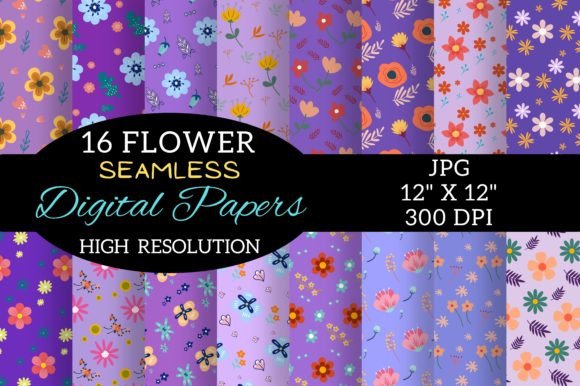
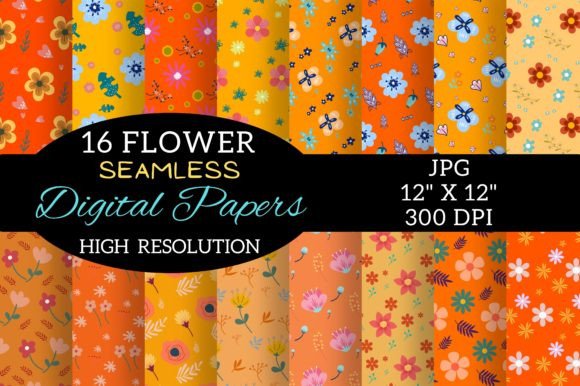
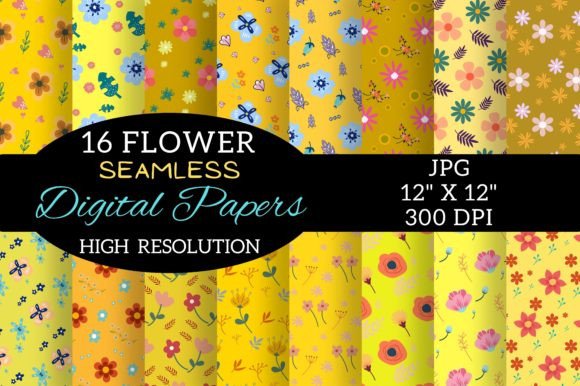
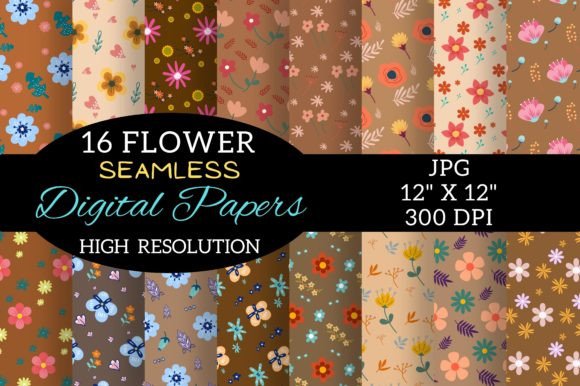
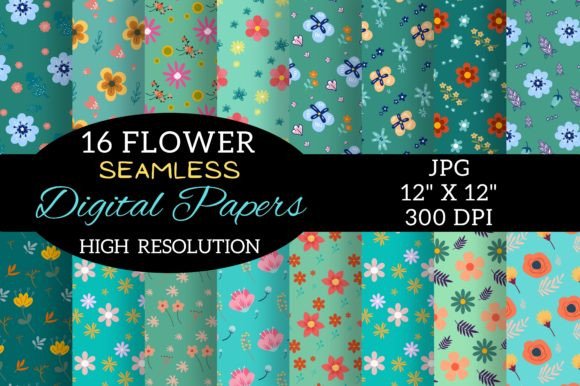
Turquoise Flower Digital Paper Patterns is a premium collection of 16 high-resolution digital paper backgrounds, each designed with botanical elegance and functional versatility in mind. The palette centers on nuanced turquoise tones—cool yet inviting, modern yet organic—paired with delicate floral motifs that balance intricacy and clarity. Unlike generic clipart or over-saturated stock textures, this set prioritizes tonal harmony, consistent scale, and print-forward fidelity.
What you receive isn’t just a bundle—it’s a workflow accelerator: a single 38 MB zipped file containing 16 JPG files, each sized at 12 × 12 inches (4000 × 4000 pixels) and rendered at 300 dpi. That means every pattern is optimized for both digital use—think social media banners, email headers, or Canva templates—and physical output, including letterpress invitations, scrapbook layouts, custom packaging, and boutique product labels.
Aligning With Industry Shifts in Creative Production
The rise of digital paper patterns like Turquoise Flower Digital Paper Patterns reflects broader movements across design, marketing, and entrepreneurship. First, there’s the democratization of professional-grade assets. As platforms like Adobe Express, Cricut Design Space, and even Shopify’s built-in editor empower non-designers to produce polished visuals, demand has surged for cohesive, brand-aligned starting points—not just isolated icons or fonts, but full-texture systems that convey mood and message at a glance.
Second, sustainability-conscious workflows are reshaping expectations. Print-on-demand services, eco-friendly paper sourcing, and reduced physical prototyping mean creators need digital assets that translate reliably across substrates—matte cardstock, kraft envelopes, textured watercolor paper—without color shifting or pixelation. The 300 dpi resolution and CMYK-friendly turquoise base in Turquoise Flower Digital Paper Patterns directly address that need, minimizing trial-and-error during prepress.
Third, personalization is no longer optional—it’s expected. Consumers respond to authenticity, not uniformity. A wedding planner using these papers for save-the-dates doesn’t just select “a floral background”; they choose a tone that evokes coastal serenity or minimalist sophistication. A stationery designer building a seasonal collection can layer one pattern as a subtle watermark beneath hand-lettered copy, another as a bold cover texture—maintaining continuity while enabling variation.
Why Professionals Are Prioritizing Contextual Texture Over Generic Decoration
Historically, digital papers were treated as afterthoughts—filler layers applied late in the process. Today, forward-thinking creatives embed them earlier: as foundational elements in brand guidelines, as unifying textures across multi-channel campaigns, or as tactile anchors in otherwise flat digital interfaces.
Consider a lifestyle brand launching a spring capsule collection. Instead of commissioning custom illustrations for every touchpoint—from Instagram carousels to product tags to email footers—they integrate Turquoise Flower Digital Paper Patterns as a consistent textural language. One pattern becomes the backdrop for hero imagery; another serves as a border element in printable lookbooks; a third is scaled down and tiled as a subtle web page background. The result? Cohesion without repetition. Recognition without rigidity.
This approach mirrors developments in design systems, where texture, spacing, and rhythm are treated with the same rigor as typography and color palettes. In fact, many UI/UX teams now include “surface treatments” in their component libraries—digital papers function similarly for print- and hybrid-focused workflows.
Real-World Applications Across Creative Roles
The versatility of Turquoise Flower Digital Paper Patterns emerges most clearly when mapped to actual use cases:
- Freelance Graphic Designers: Use the patterns as editable base layers in Photoshop or Affinity Designer—applying blending modes, masking sections, or overlaying vector graphics to build unique invitation suites in under two hours.
- Small-Business Owners: Integrate patterns into Canva templates for branded thank-you cards, gift tags, or limited-edition packaging inserts—maintaining visual distinction from mass-market competitors.
- Scrapbook Artists & Educators: Print multiple patterns on acid-free paper for layered collages, then digitize finished pages using the same files as digital journaling overlays—bridging analog and digital practice seamlessly.
- Marketing Teams: Deploy patterns as background textures in LinkedIn banner images or webinar slide decks—adding depth without distracting from core messaging.
- Print-on-Demand Sellers: Apply patterns to mockups for greeting cards, notebooks, or fabric swatches—ensuring accurate color representation before ordering physical proofs.
Each application leverages the same technical foundation—high-resolution, print-optimized, consistently scaled—but adapts it to distinct strategic goals: speed, differentiation, emotional resonance, or cross-platform consistency.
Technical Excellence as a Strategic Advantage
It’s worth underscoring why specifications matter—not as bullet points, but as operational enablers. The 12 × 12 inch, 4000 × 4000 pixel dimension isn’t arbitrary. It’s the industry standard for scrapbooking and papercraft software, ensuring drag-and-drop compatibility with Silhouette Studio, Cricut Design Space, and Procreate brushes. The 300 dpi resolution eliminates upscaling artifacts when printing at full bleed on 13 × 19 inch sheets. And the JPG format—while often overlooked—guarantees universal compatibility across platforms, from legacy desktop publishing tools to cloud-based editors with limited plugin support.
That reliability reduces friction. A marketer preparing a last-minute client presentation doesn’t need to convert files or troubleshoot color profiles. A teacher designing classroom resources can download, unzip, and insert into Google Slides in under 60 seconds. That kind of immediacy compounds across projects—saving dozens of hours annually for full-time creators.
Looking Ahead: Texture as Infrastructure
As generative AI accelerates asset creation, the value proposition of intentionally designed, human-curated collections like Turquoise Flower Digital Paper Patterns only strengthens. Algorithms generate variations at scale—but they rarely embody the quiet intention behind a balanced turquoise hue, the deliberate spacing of petal clusters, or the subtle grain that suggests tactility on screen. Those qualities aren’t incidental; they’re infrastructural. They shape how users perceive trust, care, and attention to detail—even before reading a single word.
For professionals navigating tighter deadlines, narrower margins, and higher audience expectations, investing in purpose-built assets isn’t about convenience. It’s about preserving creative authority—choosing texture, tone, and tradition deliberately, rather than defaulting to algorithmic abundance. Turquoise Flower Digital Paper Patterns meets that moment: not as decoration, but as design infrastructure—ready to scale, adapt, and endure.
Whether you're refining a brand’s tactile identity, streamlining production for a seasonal launch, or simply reclaiming time for higher-value creative decisions, this collection delivers more than pixels. It delivers permission—to work faster, express more clearly, and connect more meaningfully—with every carefully calibrated bloom.