12 Love Patterns
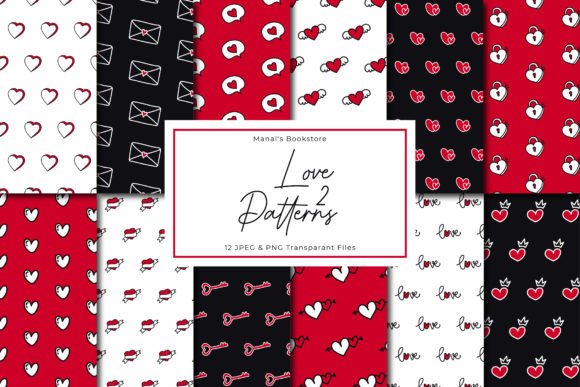
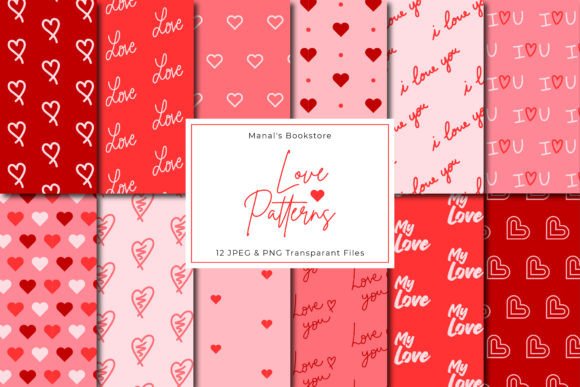
If you're designing greeting cards, launching a small-batch apparel line, or building a heartfelt blog aesthetic, the right visual foundation matters—not just for beauty, but for clarity, consistency, and emotional resonance. That’s where 12 Love Patterns stands out: a thoughtfully curated paper pack offering 12 distinct, hand-crafted love-themed illustrations—each delivered in both high-resolution JPG (3600×3600 pixels) and transparent-background PNG formats. These aren’t generic clipart or AI-generated motifs. They’re intentional, scalable, and versatile—designed to support real creative work without compromising quality or flexibility.
Why creators choose 12 Love Patterns—and why some hesitate
Many designers reach for pattern sets like 12 Love Patterns when they need warmth, sincerity, and visual cohesion—especially for projects tied to relationships, milestones, or self-expression. Think wedding stationery, affirmation stickers for planners, fabric prints for handmade totes, or subtle background textures for digital newsletters. The appeal is clear: ready-to-use assets that save time while keeping tone authentic.
Yet hesitation often comes from past experiences—not with this set specifically, but with similar downloads. Some assume “love patterns” means hearts-only clichés, or that transparency in PNGs is unreliable at print scale. Others worry about licensing gaps, pixelation when resizing, or mismatched color tones across files. Those concerns aren’t unfounded—but they’re avoidable with the right expectations and checks.
A common oversight: skipping the format check before designing
One of the most frequent missteps? Using the JPG files for layered digital design—like adding text over a background in Canva or Illustrator—without realizing the white or solid-color backdrop limits flexibility. JPGs are ideal for web banners, social posts, or printed posters where full-bleed backgrounds are desired. But if you’re layering quotes, logos, or photos on top, the PNG versions—with their crisp transparent backgrounds—are your true starting point.
Example: A small business owner designing Valentine’s Day Instagram stories used only the JPGs. When she tried overlaying handwritten captions, the white borders created awkward framing and forced extra cropping. Switching to the matching PNGs gave her clean edges and seamless integration—no extra editing, no lost resolution.
Another quiet mistake: assuming all 3600×3600 files behave the same
Resolution alone doesn’t guarantee usability. What matters more is how each file is built—especially for physical products. For instance, if you’re printing on fabric or creating iron-on transfers, a PNG’s transparency helps define cut lines and avoids unintended ink coverage. But if you’re exporting for large-format wall art, the JPG’s embedded color profile and consistent RGB values often render more predictably across printers.
Before downloading or purchasing, ask yourself: What’s my primary output? If it’s mixed use—digital + print + craft—you’ll benefit most from having both formats on hand. And yes, 12 Love Patterns delivers exactly that: 12 JPGs and 12 matching PNGs, no upselling or separate bundles.
Misunderstanding scalability—and how to test it early
“High-res” sounds reassuring—until you zoom in and notice soft edges or faint halos around delicate linework. With love-themed patterns, fine details (think vine swirls, tiny blossoms, or script flourishes) can blur if the original artwork wasn’t vector-based or carefully rasterized. 12 Love Patterns avoids this by delivering clean, well-antialiased files optimized for both screen and print—yet it’s still wise to verify.
Try this quick test before committing to a full project: Open one PNG in your design tool, enlarge it to 200% view, and inspect a corner or curve. Do lines stay sharp? Does the transparency hold cleanly against a dark layer? If yes, you’re good to scale confidently—even for 24×36" posters or 12×12" scrapbook pages.
Licensing confusion: what you *can* actually do
Some users hesitate because they’ve seen restrictive licenses elsewhere—especially with “personal use only” clauses that block client work or product sales. 12 Love Patterns is licensed for both personal and commercial use, meaning you can apply these designs to T-shirts you sell, planners you distribute digitally, or custom invitations you offer as a service. No attribution required. No per-project fees.
But here’s the nuance: while you may use the patterns freely, you may not resell or redistribute the files themselves—as standalone digital products or as part of a new pattern bundle. That protects the creator’s work while empowering your own. Always review the included license document, but know that this set was built for makers who ship real things—not just collect assets.
Color consistency across devices—and how to manage it
Love-themed palettes often rely on soft pinks, warm reds, or muted mauves—colors that shift noticeably between monitors, phones, and printed swatches. If you’re coordinating 12 Love Patterns with brand colors or fabric dyes, don’t rely solely on screen previews. Soft-proof your chosen files using your printer’s ICC profile, or order a small test print before bulk production. Likewise, for web use, export a few variations (sRGB vs. Adobe RGB) and preview them on multiple devices—not just your calibrated studio monitor.
Getting the most from variety—without overcomplicating
Twelve patterns may sound like abundance—until you’re staring at them trying to decide which three work for your wedding suite. Instead of forcing “matchy-matchy,” try grouping by function: one bold pattern for covers or headers, two subtler repeats for backgrounds, and a few detailed motifs for focal elements (like envelope liners or sticker accents). This approach honors the set’s range without diluting impact.
Also worth noting: the patterns vary intentionally—not just in motif, but in density and negative space. Some breathe openly; others feel lush and enveloping. That variation isn’t random. It’s practical design thinking, built in.
Final checklist before you begin
- Confirm your end use: Digital? Print? Physical product? Choose JPG or PNG accordingly—or keep both handy.
- Test one file first: Scale it, layer it, export it—see how it behaves in your actual workflow.
- Review the license: Yes, it allows commercial use—but double-check redistribution limits.
- Check color mode: All files are RGB—perfect for web and most home/office printers. For professional offset printing, consult your printer about conversion needs.
- Organize smartly: Rename files clearly (e.g., “LovePattern_07_PNG_Transparent”) to avoid mix-ups mid-project.
When you approach 12 Love Patterns with intention—not just as decoration, but as functional design material—you unlock its real value: saving time without sacrificing soul. Whether you’re sketching your first greeting card or scaling a boutique brand, these patterns meet you where you are. Happy creating.